


Building Vehicles for Practical Utopias
Jonathan is a strategic designer, systems thinker, and media producer exploring the intersections of participatory futurism, documentary, science fiction, and social innovation. With a background in design and urban ecologies, he has spent over 15 years developing processes and strategies around socio-ecological challenges, co-founding initiatives such as Dark Matter Labs Canada, Nouveaux Voisins, Entremise, LICER and H-MTL/Memento. He now leads Les Interstices, a practice that creates “practical utopias” combining foresight, film, and participatory design to help diverse types of communities imagine and mobilize toward better futures. His first pilot, Les Matérialistes, on the future of the circular economy of construction materials, has been screened on every continent and used by municipalities, institutions, and communities as a tool for collective transformation. He is currently producing and directing many more similar practical utopias exploring the futures of democracy, solidarity finance, Indigenous governance and aging, among others.
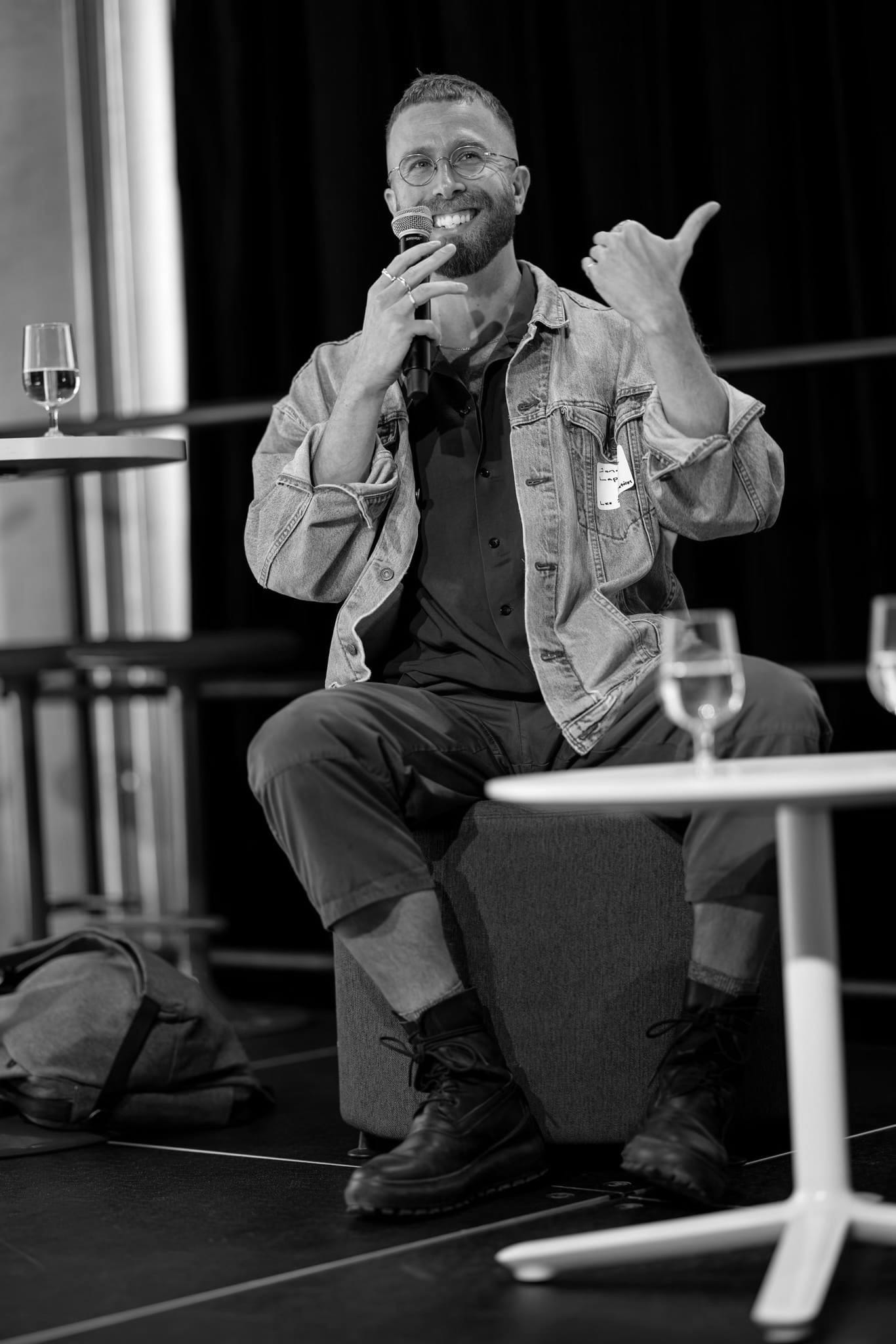
Build a new kind of media to help us feel, see, and organize toward more livable futures.
What the landing requires
- New forms of narratives that make the complexity of our systems clearer and actionable without flattening it too much.
- Funding models that support process + film + community activation as one integrated practice.
- Institutions, funders, and public actors willing to treat imagination as an essential infrastructure for change
- More porous alliances across arts, policy, foundations, governments, research, and movement building
Future-oriented media as a bridge to collective imagination: look forward with disciplined hope, stop debating only in abstract theories, build narrative legitimacy with enough people, paint pictures of tomorrow that people want to fight for today.
participatory futurism · media/film · strategic design · systems change · collective imagination · democracy / governance · community organizing

Transmission 02
Building Vehicles for Practical Utopias
What planet are you currently exploring?
A lot of the work I've been doing feels less like going elsewhere and more like reconnecting more deeply with where we are now. Maybe I am exploring parallel universes that have always been there, but have never been fully inhabited.
Instead of exploring a planet, I would say I am trying to build a new ship made of a mixture of foresight, strategic design, documentary, and science fiction. Participatory futurism is one framing, but what it is called doesn’t really matter. It is a sort of vehicle designed to help us experience the world and its complexity in a more constructive, emotional, and philosophical way. It integrates different modes of being and relating to the world, in opposition to traditional approaches that are pseudo-rational or fear- and guilt-based. It’s a shift: imagining a hopeful future not as a Eureka moment that falls from the tree, but as something that, to a certain extent, has to be engineered through a mixture of design and art.
This vehicle is more driven but also positive and aspirational; media plays a central role in the exploration vehicle I'm trying to design right now. Hope is approached with a lot of discipline, and imagination is treated as an infrastructure. When you look at the parts of that vehicle, I don't think there's anything new, in a sense, but what feels fresh, I think, is how they're all brought together and who is joining aboard.
On the one hand, Private foundations, ministries, governments, and institutions have been doing a lot of strategic planning and foresight. They have been thinking about long-term possibilities, what it holds, and what it takes to mobilize around different futures, but without using media very creatively at all.
On the other hand, communities of practice that are not used to working that way. These are media professionals who have worked across different media forms for a long time but feel that this type of work has more to do with community planning or is beyond their realm. The real challenge here is organizing professionals with different skill sets who aren't used to that kind of exploration. Still, some individuals are really excited to do things differently and to use their skills or knowledge toward different goals.
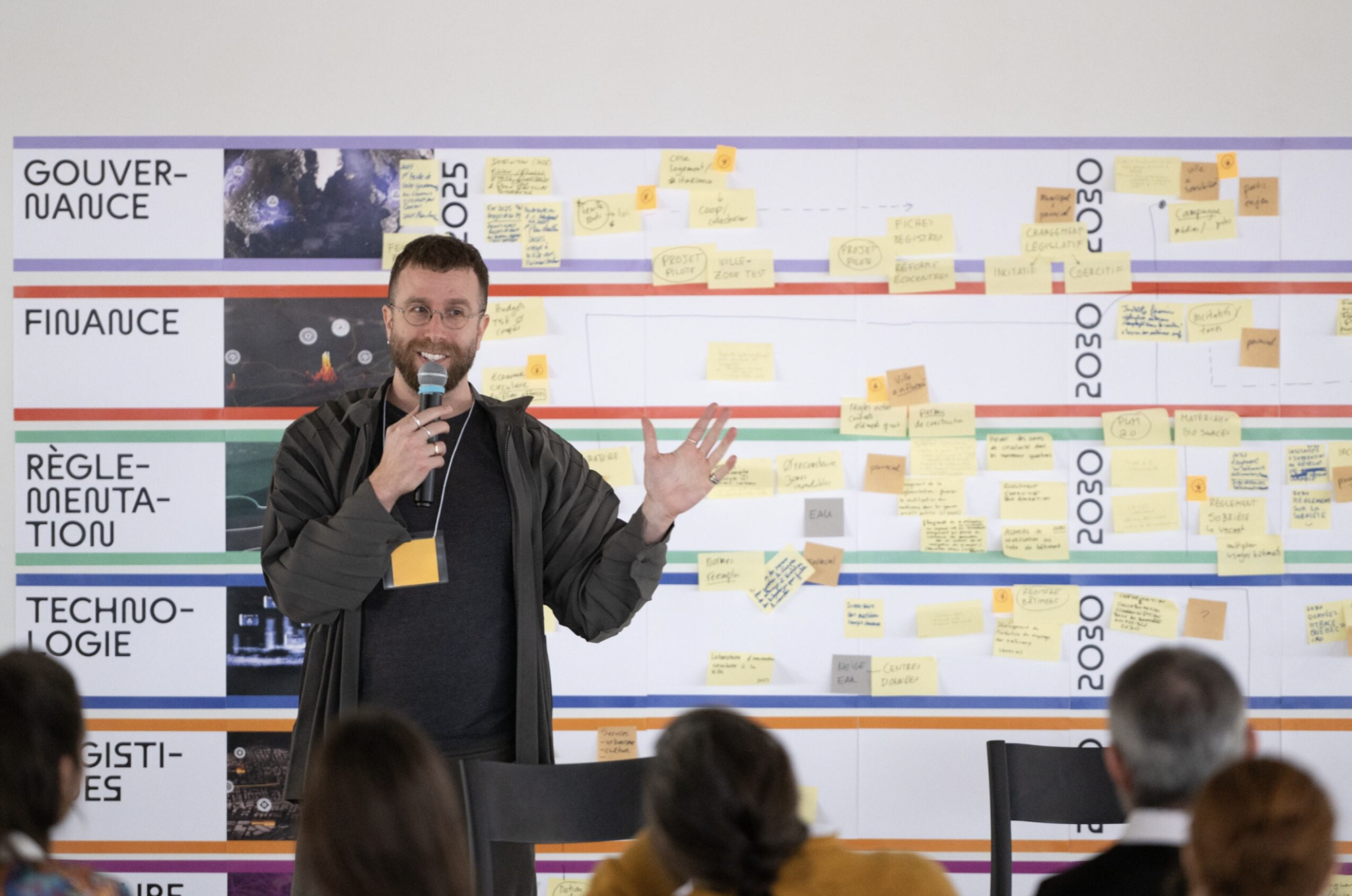
For this reason, I'm trying to focus on big questions, big challenges, and big directions of travel at the intersection of many different organizations, sectors, and disciplines. So whether it's the future of aging, the future of Indigenous governance, the future of democracy, or the future of the circular economy, they're kind of all part of the same thing. The mission becomes to extrapolate and manifest what we observe surfacing from our collective potential, painting a portrait akin to pointillism. Each film or production illuminates distinct facets of a vast, shared future universe we are actively striving to realize.
What prompted you to step away from familiar territory and take on this mission?
Reflecting on it more closely, what appears to be a pivot felt more like a steady progression of an underlying motivation. During my initial studies in cinema, I was captivated by the idea of making a film about whatever interested me, because I was interested in so many things and didn't want to settle for just one.
Filmmaking seemed like a great way to kind of explore different topics, yet I didn’t know the specific form. I remember, at sixteen, reaching out to the head of a Montreal advertising firm with the limited vocabulary I had as a teenager; I expressed a desire to lead creative projects on things that matter. Something like social advocacy through the media. I called her, and she recommended No Logo by Naomi Klein. And that convinced me to stay away from the world of traditional advertising forever.

I've always been interested in creative ways to address challenges. At first, I explored film, but I didn't know exactly how that would work. Then I got interested in design because it felt like a more concrete process. Addressing intangible, complex challenges through design thinking and strategic design gives you a toolkit for creating creative solutions to complex problems. Then I became interested in urbanism and urban ecologies, and at some point I felt the best way to address those challenges was to create new organizations dedicated to specific missions.
With every initiative, project, and organization, the common thread was creating a different story of how the world could be and manifesting it into reality.
In a sense, every entrepreneur, organizer, or policymaker out there is telling a story about the future and trying to mobilize people and resources in a preferred direction of travel, right?
Co-founding organizations such as Entremise, Nouvaux voisins, and Dark Matter Labs Canada taught me that no single organization can address complex challenges on its own. But it can be difficult to organize even among like-minded organizations, for instance, when there are different underlying competitive dynamics for funding. Having a little vision statement in your pitch deck is one thing, but generally most people, and even the change makers themselves, don’t have a clear idea of what that better future would look and feel like concretely if they succeed.
So, I took the media approach to make people feel what it would be like to do all that difficult work to make that future happen. The same way that if you want to take vacations, people will coordinate, save money, and plan to go just with the blurry image of having their toes in the sand, feeling the sun, you know, and being in the ocean, swimming. We will not motivate people to go on that trip just by talking about the risks of plane accidents, the motor, and all the technical parts, right?
For a lot of the change we're seeking, we don't have those little sparks; those future memories. People say they want that future and are ready to work to get it collectively, but then we get kind of caught up in a lot of theoretical knowledge and terms, and people argue: is it degrowth? Is it post-capitalism? Is it this? Is it that? But meanwhile, if you just describe what reality in 10 years would be like on a daily basis for anybody in their lives, if your vision becomes reality even if it’s just through enactment, then you're getting out of the theoretical words and stepping into almost a preview of that future that you just can’t let go of afterward.
Is there a part of your strategic design background you actively suppress when you direct?
Each new project feels like a convergence of all the methodologies and tools I have acquired throughout my journey, manifesting at various stages of the creative cycle. In the beginning, the process mirrors the launch of a social enterprise, but one with a finite, temporary horizon.
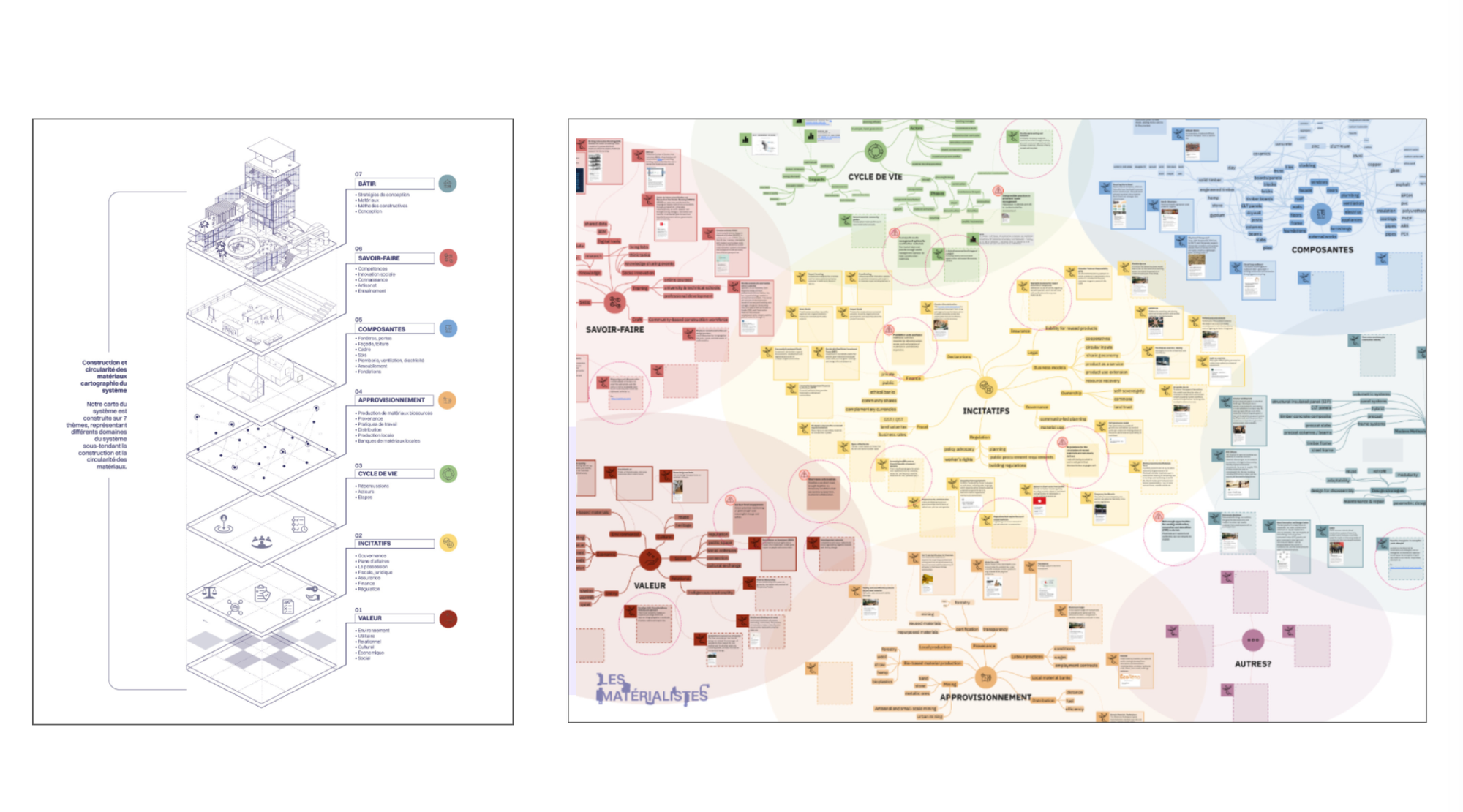
I focus on developing a creative framing for a specific issue that holds the potential for genuine transformation. For instance, with Les Materialistes, the central provocation was that while we often use "materialistic" to mean superficial, our current economy actually fails to truly value physical matter. We perhaps need an economy that is deeply materialistic in its respect for resources. This cheekiness becomes the anchor. And then, I assemble a constellation of funders, experts, and organizations around this framing, collectively building a tool designed to illuminate our direction of travel and mobilize action. Up until the storyboard phase, the work is rooted in strategic design: identifying who belongs at the table, performing systems mapping to bring the full complexity into the room, and ensuring we have the right voices to extrapolate our future needs.
Through workshops and diverse participatory methods, we gather the necessary research and input. Some themes require intensive foresight, while others build upon existing work. Once we synthesize and visualize this data, a more artistic filmmaking process begins, yet my design reflexes remain active. There is a generative, sometimes strange, tension between the singular vision of the author—which defines much of art today—and the necessity of creating a functional tool.
Because these partners are the ones actively engineering this future, the production must manifest their vision. I find myself balancing decisions based on cultural resonance and intuition with the need for the work to remain a representative, useful infrastructure for the community of practice and impact it serves.
If we zoom in on the landscape of participatory futurism, what underlying structures or systemic pressures are currently molding this world?
I took the concept of Participatory Futurism from a Nesta publication released years ago. The report centered on the notion of futures shaped for and by people. A core observation was the historical isolation of futurism as a specialized, niche domain. Typically, this expertise is confined to a handful of consultants serving government bodies, small bureaucratic units within the public sector, or affluent venture capitalists and political figures with the influence to impose their personal visions on the world. Yet, in reality, a vast array of actors—from community organizers and social entrepreneurs to traditional business leaders—are constantly engaged in a struggle to define and realize competing visions of the future.
Our collective anticipation of tomorrow is largely influenced by Hollywood’s dystopias, the hyper-fixations of tech pioneers, and the dictates of political authorities. Carving out fresh and legitimate narratives requires a direct confrontation with these entrenched visions.
And we must occasionally reclaim the very symbols they use and redeploy them to architect a different kind of collective imagination. By weaving familiar codes people already have in their minds into new mental blueprints, we manifest alternative horizons that can truly resonate.
So, there is this frontier: pre-existing images of the future and the forces currently imposing their visions of what is to come. Then, at a closer level, you have the forces of arts and cultural funding, which tend to prioritize individual authorship. But because the media industry is in crisis over funding and ad revenue, it is favoring "sure bets"—and there seems to be a belief that utopian visions of the future don't sell or don’t have a public, even though it was never really demonstrated. We all want it, though we won't fund it.
This reveals a systemic disconnect: some organizations fund specific formats or mediums, but not the underlying topic or approach. Because this practice sits at the intersection of many parallel universes that don't connect or speak to one another, you must develop a language that resonates within each, working to braid these worlds together in the back office—all while navigating the reality that as soon as you mention "film" or “collective imagination”, many doors immediately close.
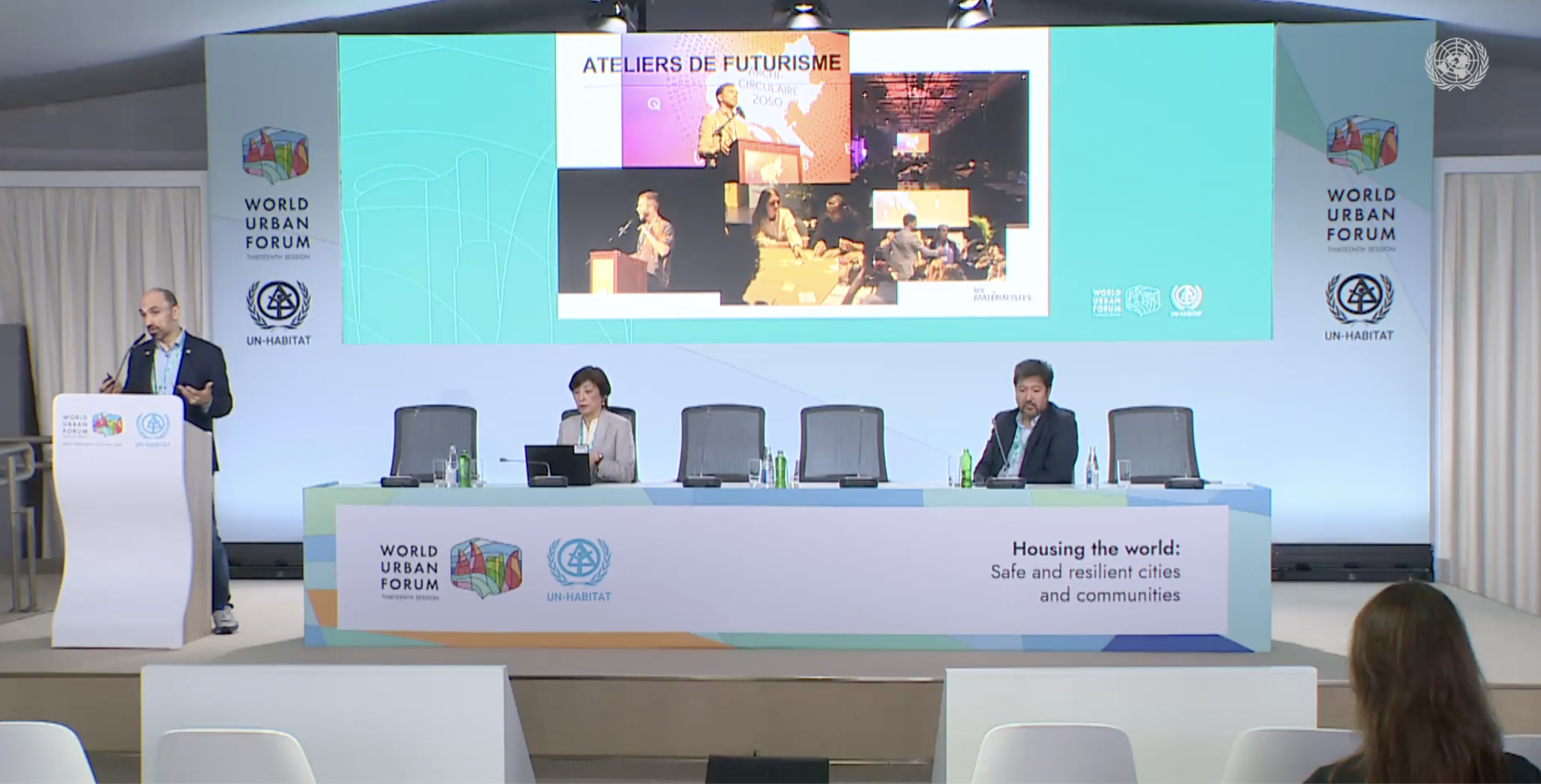
Participatory futurism transcends the medium; it requires challenging the systemic barriers of specialized departments and rigid institutional and disciplinary legacies.
It directly confronts the sentiment that "this is not our realm" or "this is not how we operate in my department." Language, funding, and legacy habits, etc. All of those things are the forces we are navigating.
Moving to a closer perspective: what factors explain why so few practitioners arrive at this specific intersection and domain? What drives this rarity?
Sometimes I wonder if this relates to the theory of the diffusion of innovation. At the forefront, there is always the innovator or the innovation itself. Venturing in that direction or exploring uncharted fields can feel like walking through pitch darkness, where the destination is completely unknown. You don't know exactly where you're going.
When I am immersed in that process, I rely on an internal compass. It’s a deep, intuitive feeling that the journey is entirely worth my time, even without any certainty that it will succeed.
At the moment, I observe that numerous artists and creative professionals are experiencing significant anxiety. This stems from the fact that many investments, programs, and television shows are being canceled. Consequently, individuals I know within the media and creative sectors have experienced a substantial decline in their contracts over recent months and years, continuing a long-term trend.
These professionals express immense gratitude for new, emerging opportunities that align more closely with their core values. However, because this shift is just starting, such opportunities remain scarce. While some creatives desire to pivot their careers, they are hesitant to embrace the profound uncertainty associated with such a transition. It seems people navigate the complete unknown in different ways: some are willing to dive straight into it, some just need a bit of light to make the leap, while others require absolute clarity.
Personally, it took me two years of active effort, and a lot of experience before that, to successfully finance a project of this nature. However, once the first pilot was launched, this momentum accelerated, enabling the funding of multiple similar initiatives, and it seems to be accelerating. This shift raises an important question: will this practice remain a niche, a series of beautiful exceptions, or will it foster a new legitimate sector through which more individuals can transition as their current professional terrain unravels?
Ultimately, few would regret seeing a decline in corporate advertising in favor of collective future advertising. While the term "advertising" is used here to draw a direct parallel, this work transcends traditional advertising, even social advertising, even though it utilizes many of the same core skills. The fundamental toolkit remains similar, but the underlying stance, how you organize around it, and your positionality are profoundly transformed.
Up close, what does the ground level truly look like? What is the tangible reality and lived experience of carrying out this work day to day?
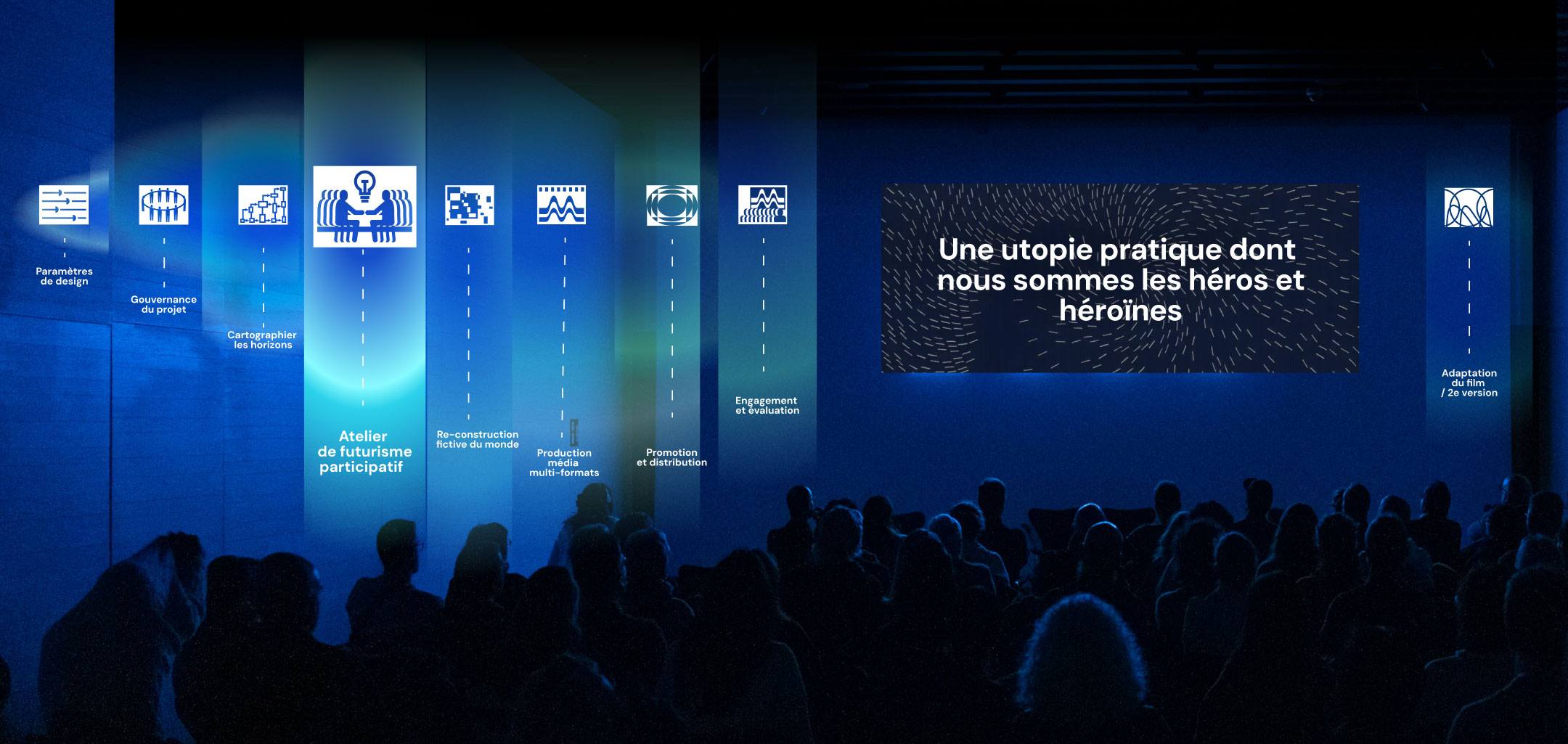
My overall methodology of participatory futurism encompasses several interconnected dimensions: the collaborative process of making the film, the audience's experience of the first iteration of the production, the subsequent workshops and community organizing centered around the film once it becomes available, and the possibility of adapting the narrative to include all the learning from that growing collective intelligence
Participants in the workshops conducted both before and after the screening are consistently positively surprised by their own emotional responses to the methods we use. For many, it marks a rare opportunity to connect with the concepts of the past and the future in a deeply meaningful way through an embodied meditation on time and generations. Then, engaging in our collaborative, improvisational future theater unlocks their creativity, allowing them to have genuine fun while leaving them feeling significantly more hopeful and excited about the future. In partnership with HEC, we have also begun formally measuring these positive shifts in well-being and outlook.
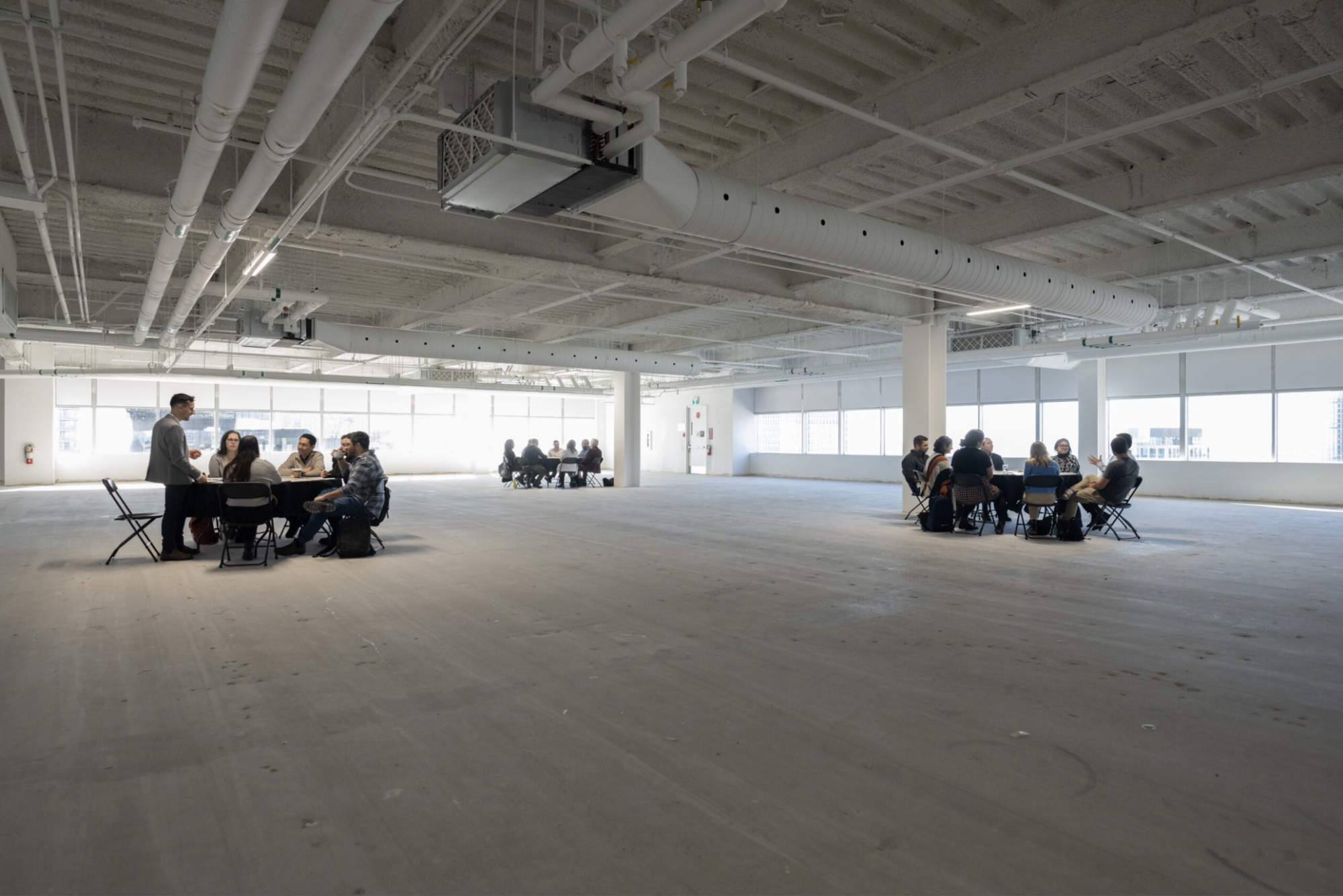
The concrete impact of this approach is well illustrated by a workshop held on a vacant floor of a skyscraper with the City of Montreal for Les Materialistes, which brought together 14 services and the boroughs. Following the session, 100% of participants reported increased hope for the future, 97% reported a greater understanding of the circular economy through a futures lens, and 42% started new initiatives inspired by the film and workshop within the following three to four months.
And then, the professionals involved in creating the film generally report a profound sense of excitement as they see their specialized skills—traditionally reserved for corporate advertising or mainstream entertainment—used in service of a collective mission. Whether these workshops are held online or offline, they generate strong engagement. The in-person sessions are particularly vibrant, resonant with collective laughter, even in the rooms filled with the most “serious” professionals.
These environments ultimately dissolve the traditional boundaries separating "serious work" from creative and artistic play, providing participants with a rare opportunity to bring their whole selves into the room.
What are you carrying with you on this journey, and do you keep returning to when you are stuck with projects?
Everything! It is challenging for me to pin down specific influences because I have focused on different subjects, methodologies, and crafts at various stages of my life, gradually synthesizing them into this emerging practice. Once integrated, they become second nature rather than explicit references.
My work draws on a broad mix of disciplines—ranging from strategic design, urban ecologies, and systems thinking to activism, media strategy, film production, philosophy, personal development, and futures thinking.
Ultimately, this approach is a synthesis of my personal growth, self-reflection, and professional experience across all roles, big or small, in this specific moment in our history, when everything has to be reimagined. Every insight is folded into the practice to enable this work at every stage.
Still, I'm constantly working to integrate and synthesize more into my practice, which is, in a sense, the practice itself. How could it be even better integrated within the network and neural information ecosystem we are in, for instance? I can clearly identify the knowledge and tools I am currently gravitating toward, as well as those I still feel are missing.
For example, the primary challenge I face right now is navigating the tension between telling a story that remains accessible while still accurately reflecting genuine complexity. I struggle with how to convey constructive complexity rather than overwhelming complexity when building narratives about the future. How can we go beyond these systems maps that look visually striking, yet leave you unsure of where to even begin reading? By the time you figure out how to engage with it, cognitive fatigue sets in, competing priorities demand your attention, and you ultimately disengage. My intention is to help diverse actors across sectors see themselves in the story and recognize the unique role they play.
Are there specific rituals or practices that help you connect with and integrate your different identities?
While I have experimented with various practices over time, I do not currently adhere to a strict daily ritual right now. Though I have engaged in rigorous meditation and extensive self-introspection over the years, my current approach relies more on trust and emergence.
When initiating a new project, such as exploring the future of democracy, I begin by drawing on my existing foundational knowledge and experiences. I then immerse myself in deep reading and preliminary conversations on the subject, to the point where I feel like I’m almost drowning in information. After this initial phase, I intentionally step back and let the material settle, trusting that synthesis will occur first subconsciously, then consciously.
Creative insights often emerge during ordinary moments, whether I am taking a long walk with my dog, taking a shower, or having an unplanned conversation with someone who is asking about the work. My process balances active, focused execution with an openness to spontaneous inspiration, rather than following a rigid plan.
On a more physical level, I regularly seek out elevated or open spaces, such as rooftops, riverbanks, or waterlines. Observing a vast physical landscape satisfies a need that mirrors my desire to look far into metaphorical, abstract, and systems-oriented horizons. That sense of visual and mental expansiveness brings a feeling of ease, especially when long-term perspectives feel hard to access.
What keeps you grounded and helps you navigate when facing instability, complexity, or shifting terrain?
I have drawn on many tools and practical rituals in the past that I might not explicitly name or follow as formal routines anymore, but I still embody them. Connecting with the travel and vehicle metaphor, I keep reminders and symbols posted inside the electrical panel in my house to stay grounded, present, and close to my essence. This reflects a key realization about travel: often, what we are searching for is already right here. It comes down to listening more calmly and attentively to what is already present.
This brings to mind the book The Neo-Generalist, subtitled Where You Go Is Who You Are, which features interviews with various practitioners that don’t fit within narrow specializations. I resonate with it because it highlights how the travel metaphor can become problematic on its own.
The more connected I feel to who I truly am and to what is already present around and within me, the clearer my path and actions become.
At the same time, I believe more and more in self-authorship rather than in self-discovery, so it’s not one or the other; it’s both and more.
For example, when facing major questions about where to lead my practice, how much effort to invest in starting anew, and what the coming years would demand, I took a week completely away from work. Simply settling into myself and letting go of the noise made the next few steps on the path clearer.
Looking ahead three years at the future you are building, what does a meaningful landing look like for your work?
I prefer to answer in a non-dual way: there will never be a complete landing, as the work is continuous and never fully finished. At the same time, I can imagine specific milestones along this journey that are worth celebrating and striving toward.
First, I want to refine this practice so it is equally appreciated by domain experts, people unfamiliar with the subject, practitioners on the ground building that future, and media professionals creating strikingly beautiful work.
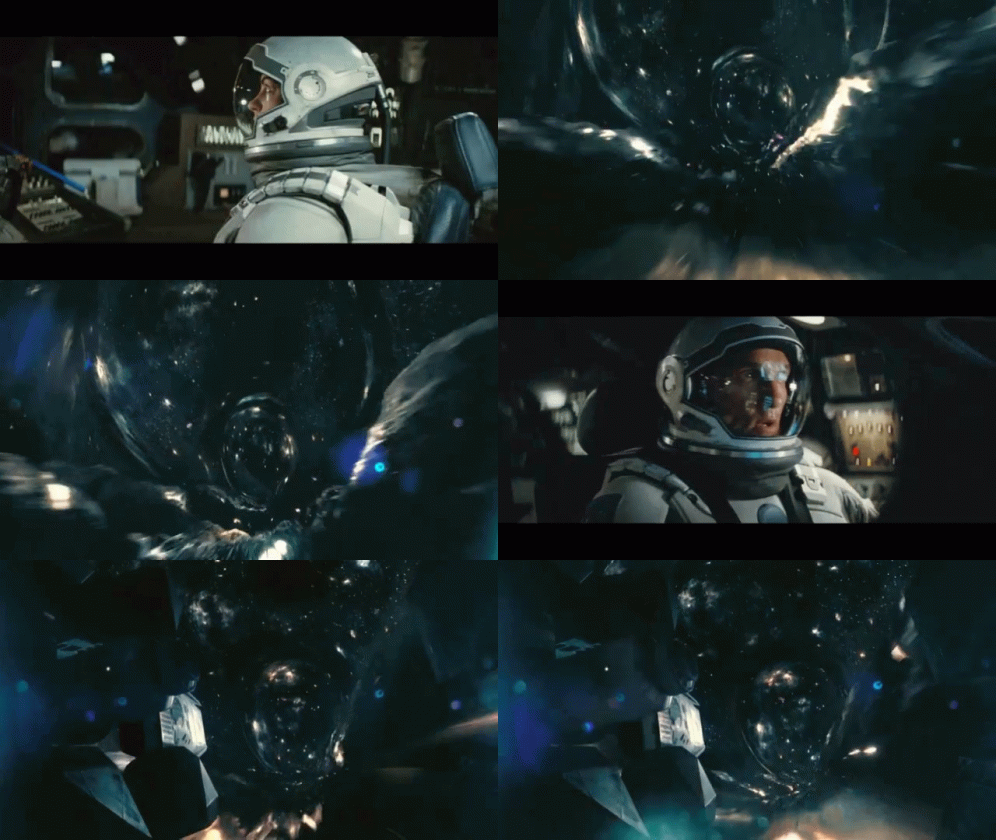
Currently, this work sits at the intersection of different worlds, which can feel like navigating unstable terrain, like the scene where they are trying to dock in Interstellar. A meaningful milestone would be reaching a point where I can help create new opportunities for artists and creatives, enabling them to dedicate their crafts and time toward work that feels more meaningful. I would also love for these productions to gain broader recognition, not just among those excited about foresight, futurism, design, and systems change, but as something accessible, engaging, and enjoyable for the general public; as an essential piece of our shared imagination infrastructure.
For example, with Les Matérialistes, seeing it used across diverse spaces—from architecture, heritage, ESG, design, and futurism to mining industries, municipal workshops, design biennales, and the UN—felt like an initial landing. It proved that this can serve as a versatile tool adaptable for many different audiences globally, even if it was made with one locality in mind.
Ultimately, another major milestone would be establishing a more solid, sustainable practice in which funding each new production isn't a constant struggle or a matter of bricolage, and where I am surrounded by a team that shares this vision and is ready to build it together. Beyond that, expanding reach through major platforms like a Netflix series, an Oscar win, or deeper collaborations with the UN and governments would help formally blur the lines between these fields.
Just to add another one: have you heard of mission-oriented innovation, such as Mariana Mazzucato’s framework? Well, it aims to function like the moon landing, but tailored for complex challenges that aren't only technological. The moon landing provides a very clear destination that everyone can easily visualize. My goal is to create a media production that renders the ultimate destination of a mission tangible, visceral, and concrete. Ideally, this would lead a funder to provide substantial backing to turn those depicted ideas into reality, securing major funding for systems change aligned with that co-created media narrative to fuel further momentum.
Ultimately, I feel like what’s most important is giving people more hope about the future and what’s possible, because I don’t think we can become what we can’t see.
As a child, I wanted to be an astronaut, but I guess what I meant was that I wanted to explore the unknown and make the invisible (more) visible.
What signal would you like to transmit to future explorers?
I would return to this central idea from the book I shared: where you go is who you are. As human beings, we face real limits; we cannot take on every role, play every part, or overextend ourselves indefinitely without risking burnout. Because of this, the core question isn't simply what kind of change you wish to see in the world, but rather what your specific role in that change should be.
Cultivating self-knowledge is essential for recognizing these boundaries and directions. It allows you to accept that while you might aspire to be someone who does it all, your true contribution lies where your unique strengths reside, closer to your ikigai.
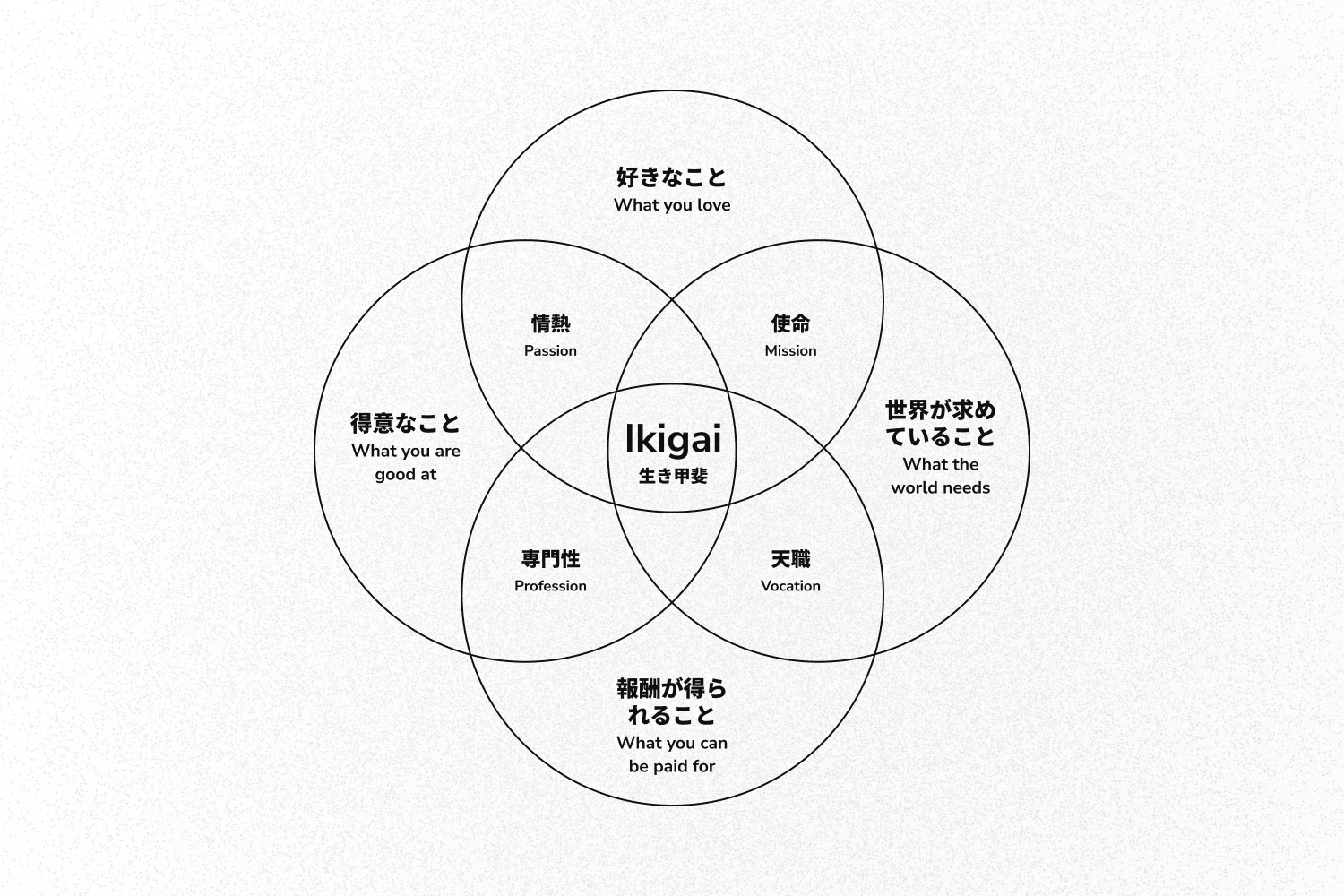
This highlights a key paradox in how we communicate these ideas: where you go is who you are. The further out you explore, the closer you come to your true self. This tension reveals the inherent limits of language in capturing our reality, which remains far more complex and nuanced than any words we can construct. Ultimately, I would conclude with that paradoxical statement. Encouraging future travelers to let go of rigid ideas, trust that where you go is who you are, and embrace the tension of navigating it.